
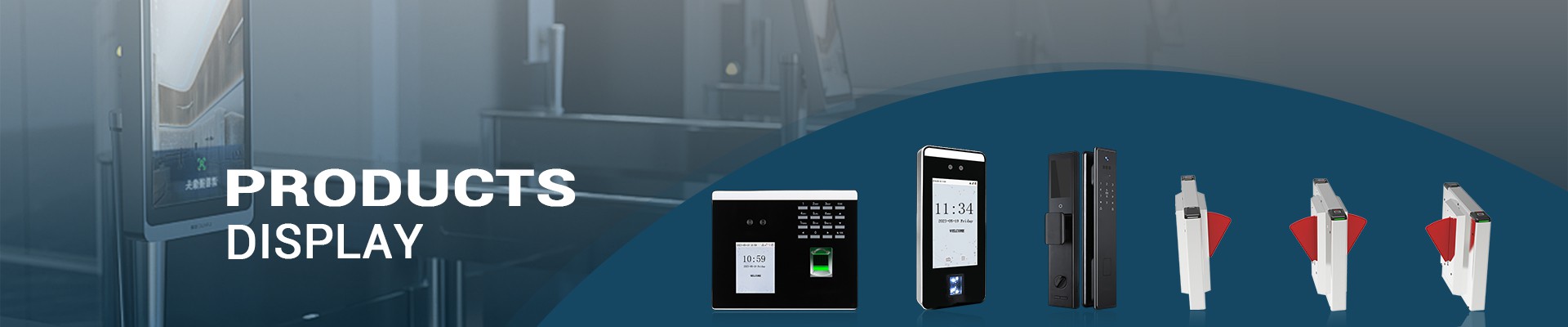
Entrance control is a common type of access control equipment, mainly composed of gates and access control systems. The gate controls the opening and closing of doors, while the access control system handles identity verification and authorization management for entering personnel. Entrance controls are widely used in various business settings, including enterprises, office buildings, factories, laboratories, warehouses, and crowded public places. By implementing entrance controls, businesses can ensure that only authorized individuals enter, thereby improving security management levels and reducing the occurrence of security incidents. Additionally, entrance controls facilitate the entry and exit of personnel, enhancing efficiency and reducing management costs.
Advantages of Entrance Controls
Greater durability
The equipment is commonly made of materials such as steel, which is long-lasting, corrosion-resistant, and very durable. Additionally, it utilizes rigorous workmanship that further reduces the likelihood of damage and the need for repeated repairs.
Providing 24/7 security
For some facilities, such as university campuses and gyms, there maybe a requirement for ‘out of hours’ access whereby members or students can enter the premises after the reception has officially closed.
Minimising inconvenience
It can be customized to meet actual demands through various personnel identification methods such as card authentication, fingerprint authentication, and facial recognition. This versatility allows for a reduction in the number of management personnel or even enables unmanned operation, ensuring quick and convenient passage for individuals.
Safety Considerations
It can provide an orderly and civilized passage for entering and exiting personnel, eliminating unauthorized access. In emergency situations, these systems can rapidly open gates to function as fire exits, ensuring smooth and convenient evacuation routes for timely personnel safety.In addition, it helps to avoid long waits and congestion at entrances, reducing safety hazards.
-
![Flap Barrier]() Flap BarrierThe flap barrier is a type of turnstile gate with a stylish appearance, fast traffic speed, and effective pedestrian verification. It is also referred to as a flap barrier gate or flap barrier turnstile and is commonly deployed in areasread more
Flap BarrierThe flap barrier is a type of turnstile gate with a stylish appearance, fast traffic speed, and effective pedestrian verification. It is also referred to as a flap barrier gate or flap barrier turnstile and is commonly deployed in areasread more -
![Tripod Turnstile]() Tripod TurnstileA tripod turnstile is a waist high access control turnstile with three revolving arms. Tripod turnstiles restrict access to one person at a time with a set of rotating tripod barrier arms. These half height turnstile gates haveread more
Tripod TurnstileA tripod turnstile is a waist high access control turnstile with three revolving arms. Tripod turnstiles restrict access to one person at a time with a set of rotating tripod barrier arms. These half height turnstile gates haveread more -
![Fence Boom Barrier]() Fence Boom BarrierBoom barriers are placed in areas of high human footfall. Fence boom barriers are placed in areas like shopping malls, parking lots, checkpoints, and entrances to restricted areas. A boom barrier, also known as a boom gate, works through aread more
Fence Boom BarrierBoom barriers are placed in areas of high human footfall. Fence boom barriers are placed in areas like shopping malls, parking lots, checkpoints, and entrances to restricted areas. A boom barrier, also known as a boom gate, works through aread more -
![Swing Barrier]() Swing BarrierOur swing barrier products are high-tech products mainly for intelligent management of personnel entrance. The equipment will be mechanical, electronic, microprocessor control and a variety of identification technology organicallyread more
Swing BarrierOur swing barrier products are high-tech products mainly for intelligent management of personnel entrance. The equipment will be mechanical, electronic, microprocessor control and a variety of identification technology organicallyread more -
![Automatic Retractable Gate]() Automatic Retractable GateAutomatic Retractable Gate leads the new style of security with intelligent technology. It adopts advanced trackless design, running smoothly and freely, showing excellent technical characteristics.read more
Automatic Retractable GateAutomatic Retractable Gate leads the new style of security with intelligent technology. It adopts advanced trackless design, running smoothly and freely, showing excellent technical characteristics.read more -
![Intelligent Single-Channel Arc]() Intelligent Single-Channel ArcOur Intelligent Single-Channel Arc, with exquisite craftsmanship fused with cutting-edge technology, reshapes the new standard of safe passage. Made of stainless steel 304, it is durable and corrosion resistant.read more
Intelligent Single-Channel ArcOur Intelligent Single-Channel Arc, with exquisite craftsmanship fused with cutting-edge technology, reshapes the new standard of safe passage. Made of stainless steel 304, it is durable and corrosion resistant.read more


Why Choose Us
Our factory
Dalian Ruiyu Technology Co., Ltd., a leading company in intelligent security and biometric recognition, focuses on biometric technology as its core, integrating cutting-edge technologies such as computer vision, Radio Frequency Identification (RFID), and the Internet of Things (IoT) to provide comprehensive products and customized solutions for the security, attendance, door lock, and software industries, setting a new trend in intelligent technology.
Our products
All kinds of products have either fingerprint recognition, or card recognition, or face recognition and other various biometric modes, which will provide security and convenience for your work and life.
Production market
With exceptional product performance and perfect after-sales service system, we have achieved remarkable performance in both domestic and international markets, earning widespread credit. Our intelligent security products, which sell well in Asia, Europe, North America and other 100+ countries and regions around the world, have won wide recognition in the international market.
Our service
Our company, customer-oriented, provides one-stop service. Before the sale, we provide professional consulting and proposal design services to ensure that customer needs are accurately achieved; During the sale, we provide installation guidance and technical support to ensure smooth product deployment; After-sales, we have a 24-hour customer service hotline and rapid response mechanism, at any time to solve the problems encountered by customers, so that customers have no worries.
Entrance Control – How to Control Who Accesses Your Premises
Security is a top priority for businesses of all sizes. Whether you run a small office or manage a large commercial complex, controlling who accesses your premises is essential for maintaining the safety and security of your employees, assets, and sensitive information.
Some businesses allow guests for events, or throughout the working day, which can cause more complications. Entrance control plays a vital role in this regard, as it allows you to regulate entry and exit points to your building effectively. Businesses may need to consider numerous different types of entrance, and different levels of security based on what you are looking for. For example:
Main Entrances
These are the primary entry points to your building and are typically used by employees, visitors, and delivery personnel. Main entrances often feature access control systems such as key cards, biometric scanners, or keypad entry systems to restrict unauthorised access.
Emergency Exits
Emergency exits are designed to provide a quick and safe evacuation route in case of emergencies such as fires or natural disasters. While these exits should remain accessible at all times, they can be equipped with alarms or panic bars to deter misuse and ensure compliance with safety regulations.
Service Entrances
Service entrances are used for deliveries, maintenance, and other operational tasks. These entrances may have limited access and can be equipped with security features such as security cameras or intercom systems to monitor and control entry.
Car Parks
For buildings with parking, controlling access to parking entrances is crucial for preventing unauthorised vehicles from entering the premises. Automated gates, access cards, barriers, or ticket-based systems can be used to manage entry and exit from parking facilities.
Entrance Control: Components and Management
The purpose of an entrance control solution is to ensure that only authorized personnel or individuals are allowed access to a specific area. This can be important for security and safety reasons, as well as for controlling access to sensitive or confidential information or equipment. Some common components of an entrance control solution include
Access control devices
Keycard readers, biometric scanners, or PIN pads that verify the identity of an individual seeking access.
Physical barriers
Doors, gates, turnstiles, or other physical barriers that prevent unauthorized individuals from entering.
Video surveillance
Cameras that monitor the entrance and can record video footage for review.
Alarm systems
Audible alarms or alerts that notify security personnel if an unauthorized person attempts to enter.
Visitor management system
A system that tracks and manages visitors, including issuing visitor badges, collecting personal information, and logging their movements.
Intercom or two-way communication system
A system that allows individuals to communicate with security personnel before entering.
Considerations When Choosing an Entrance Control System


How many turnstiles do I need?
Think about the number of people entering and exiting the facility, and don’t forget about the required throughput, or flow of people, during peak and off-peak times. What is the size of the entranceway? Typically, the larger the entrance area, the more turnstiles will be required. But, you also need to consider where the people are moving to beyond the turnstiles. There is no point in creating an entrance control system capable of processing 200 people into a foyer with only one lift shaft – it will soon create a problem.
Who uses the area?
Keep in mind the people using the building, for example permanent staff, visitors, children, people with reduced mobility, delivery drivers etc. Should everyone entering/exiting the facility have access to all areas beyond the turnstiles? Or will you also need to secure other areas of the building, such as a server room, and only grant access to certain individuals? Do you need to have the capability to arrange temporary access for visitors or contractors? How will these people be processed?
What level of security is needed?
What are you protecting – your building, people, assets, data, all of these? If you understand the value of what you’re protecting, and also the key risks associated with an unauthorised intruder gaining access, you can start to determine the level of security you require. Question whether you need to physically prevent unauthorised access attempts, or just monitor the flow of people into/out of your facility, and consider what barrier height is most suitable. The higher the barrier, the higher the security but, the look of the turnstiles needs to be in keeping with the environment they are securing.
What functions are the turnstiles required to perform?
As well as preventing unauthorised access, security turnstiles can perform a variety of other functions, connecting existing disparate systems and delivering time and space efficiencies through product integrations. Do you have an existing access control system which needs to be integrated with the turnstiles? Is there a requirement to integrate other building management systems, such as HVAC, CCTV or lift destination displays?
How do I want the turnstiles to look?
In addition to a range of functional product integrations which allow you to satisfy your required specifications, there are a number of ways in which you can tailor the final look of turnstiles, allowing you to reflect your organisation’s brand. When considering the look of your system, think about the environment the turnstiles will be in, what finish would complement the style of the building – metal type, paint colour, natural wood etc. Do you wish to feature your company logo or brand colours? Are there any other bespoke requirements?
Total cost of ownership
Cost considerations of an entrance control system should take in more than just the purchase price. Other things to think about include electricity usage, maintenance requirements, reliability, warranty and more, to give you the total cost of ownership and a holistic view of the better value purchase. We’ve covered this topic previously in more detail here.
How Our Entrance Controls Maintenance Works
Expert consultation
Begin with a comprehensive consultation about your entry control requirements. We address the full spectrum, from traditional keyed entry to sophisticated biometric systems, serving a wide range of properties throughout.
Complimentary asset condition report
We start the maintenance routine with an entry control system asset condition report. This detailed report assesses the current status of your entry control infrastructure, pinpointing its capabilities, vulnerabilities, and potential enhancements. With a clear picture of your system’s health, we can customise our maintenance services to match your specific requirements, guaranteeing optimal security and operational performance.
Dedicated maintenance and servicing
Stay compliant and secure with our regular entry control maintenance services. From systematic inspections to scheduled upkeep, we focus on ensuring the reliability and efficiency of your entry control system, always prioritising your security.
Entrance Control Vs Access Control: Similarities and Differences
If access control verifies authorised personnel using their credentials – their face, fingerprints, PIN number, fob, key card etc – and decides whether or not they are permitted access, entrance control is the hardware which enforces that decision by making users present their credentials in the correct way, either opening to allow pedestrian access or remaining closed to bar entry and potentially raising an alarm.
For example, a card reader acts as an access control device, recognising the card holder as having the correct permissions and saying ‘yes, this person can pass’. But, it’s the entrance control system – a turnstile, for example – which actually physically allows or denies access.
Some entrance control systems don’t feature a physical barrier, however. It will not physically stop an unauthorised person from passing through, and instead alarm when someone fails to present valid credentials, alerting security staff that a breach has occurred. These kinds of turnstiles are suited to environments which just need to delineate between the public and secure side of an entrance, with less need to physically prevent unauthorised users from entering.
It’s also possible to capture video footage of any incidents, allowing security personnel to identify users failing to abide by the access control system’s rules, using It’s also possible to capture video footage of incidents, allowing security personnel to identify users failing to abide by access control system rulesthe footage to decide on the level of response required. The breach could have been the result of a member of staff being in a hurry and failing to show their card before passing through, in which case they can be reminded about the security protocol. Or, it could be an unidentified person who needs to be escorted from the premises.
For optimum security, access control and entrance control should work together, with the entrance control system enhancing the use of the access control system, making it more efficient and better value for money. The two can’t effectively operate without each other. Security turnstiles, for example, require something to tell them that someone is about to enter – the access control system does this – and, the access control system needs a method of stopping people when they don’t badge in correctly. The two systems are complementary.
Our factory
Dalian Ruiyu Technology Co., Ltd., a leading company in intelligent security and biometric recognition, focuses on biometric technology as its core, integrating cutting-edge technologies such as computer vision, Radio Frequency Identification (RFID), and the Internet of Things (IoT) to provide comprehensive products and customized solutions for the security, attendance, door lock, and software industries, setting a new trend in intelligent technology. Our factory is an industry-leading OEM/ODM manufacturing center, known for its excellent production capacity and customized services, and has been supplying products to the world's top 50 smart product brands for years, demonstrating exceptional quality. Depending on the most advanced production lines and integrating cutting-edge technology with a rigorous 6S management system, we ensure meticulous attention to detail from raw materials to finished products, creating an efficient and precise production process.


FAQ
Q: What are entrance controls?
A: Entrance controls are security measures and systems designed to manage and restrict access to buildings or specific areas, ensuring only authorized individuals can enter.
Q: Why are entrance controls important?
A: They enhance security, protect assets, and ensure the safety of occupants by preventing unauthorized access and monitoring who enters and exits a facility.
Q: What types of entrance control systems are commonly used?
A: Common types include keycard access systems, biometric scanners, keypad entry systems, turnstiles, and security guards.
Q: How do keycard access systems work?
A: Keycard systems use magnetic or RFID technology, allowing users to unlock doors by swiping or tapping a card that is programmed with access permissions.
Q: How do access control systems manage permissions?
A: Access control systems allow administrators to set permissions for individuals or groups, determining who can access specific areas and at what times.
Q: What is the difference between physical and electronic entrance controls?
A: Physical controls involve barriers like locks and guards, while electronic controls use technology like keycards and biometrics to manage access.
Q: How do entrance controls enhance visitor management?
A: Entrance controls can track visitor access, issue temporary credentials, and monitor visitor movements within a facility for security and safety.
Q: How can entrance controls be adapted for different environments?
A: Systems can be customized based on the specific needs of various environments, such as offices, schools, hospitals, or industrial sites.
Q: What is the importance of regular maintenance for entrance control systems?
A: Regular maintenance ensures that systems function correctly, reduces the risk of failures, and extends the lifespan of the equipment.
Q: How do entrance controls contribute to emergency response?
A: They can provide real-time data on who is in the building during emergencies, aiding evacuation efforts and ensuring accountability.
Q: What are the privacy concerns associated with biometric systems?
A: Privacy concerns include data security, potential misuse of biometric data, and the need for compliance with regulations regarding personal information.
Q: How can organizations educate employees about entrance control policies?
A: Organizations can provide training sessions, distribute informational materials, and conduct regular reminders to ensure employees understand access protocols.
Q: What role does technology play in modern entrance controls?
A: Technology enhances the effectiveness of entrance controls through automation, remote monitoring, and data analytics for improved security management.
Q: What future trends are expected in entrance control systems?
A: Future trends may include increased use of mobile access solutions, advanced biometrics, AI-driven analytics, and greater integration with smart building technologies.
Q: What are biometric entrance controls?
A: Biometric controls use unique physical characteristics, such as fingerprints, facial recognition, or iris scans, to verify a person's identity before granting access.
Q: What is a keypad entry system?
A: A keypad entry system requires users to enter a numeric code to unlock a door, providing a simple and effective way to control access.
Q: How do turnstiles function as entrance controls?
A: Turnstiles are physical barriers that allow entry only when a valid access method is used, such as a keycard or biometric scan, ensuring controlled access.
Q: What are the benefits of using biometric systems?
A: Biometric systems offer high security, as they are difficult to forge or share, and they can streamline access without the need for physical keys or cards.
Q: Can entrance control systems be integrated with other security measures?
A: Yes, many entrance control systems can be integrated with surveillance cameras, alarm systems, and building management systems for enhanced security.
Q: What is the role of security personnel in entrance control?
A: Security personnel monitor access points, verify identities, respond to incidents, and ensure compliance with security protocols.
As one of the leading entrance controls manufacturers and suppliers in China, we warmly welcome you to wholesale high quality entrance controls for sale here from our factory. Contact us for more details.
automatic flap barrier, motorised retractable gates, flap barrier turnstile-
![Biometric Fingerprint Access Control]() Biometric Fingerprint Access ControlBiometric fingerprint access control adopts cutting-edge biometric technology, accurate and fast unlocking, andread more
Biometric Fingerprint Access ControlBiometric fingerprint access control adopts cutting-edge biometric technology, accurate and fast unlocking, andread more -
![Fingerprint Time Attendance Terminal]() Fingerprint Time Attendance TerminalFingerprint time attendance terminal is a professional access control integrated machine, with a 2.4-inchread more
Fingerprint Time Attendance TerminalFingerprint time attendance terminal is a professional access control integrated machine, with a 2.4-inchread more -
![Fingerprint Door Access Control]() Fingerprint Door Access ControlFingerprint door access control is a professional access control all-in-one machine launched by our company, which usesread more
Fingerprint Door Access ControlFingerprint door access control is a professional access control all-in-one machine launched by our company, which usesread more -
![Smart Biometric Fingerprint Door Lock]() Smart Biometric Fingerprint Door LockSmart biometric fingerprint door lock adopts a full-screen design, fingerprint entry is set at the handle so it is moreread more
Smart Biometric Fingerprint Door LockSmart biometric fingerprint door lock adopts a full-screen design, fingerprint entry is set at the handle so it is moreread more -
![Flap Barrier]() Flap BarrierThe flap barrier is a type of turnstile gate with a stylish appearance, fast traffic speed, and effective pedestrianread more
Flap BarrierThe flap barrier is a type of turnstile gate with a stylish appearance, fast traffic speed, and effective pedestrianread more -
![Tripod Turnstile]() Tripod TurnstileA tripod turnstile is a waist high access control turnstile with three revolving arms. Tripod turnstiles restrictread more
Tripod TurnstileA tripod turnstile is a waist high access control turnstile with three revolving arms. Tripod turnstiles restrictread more


