
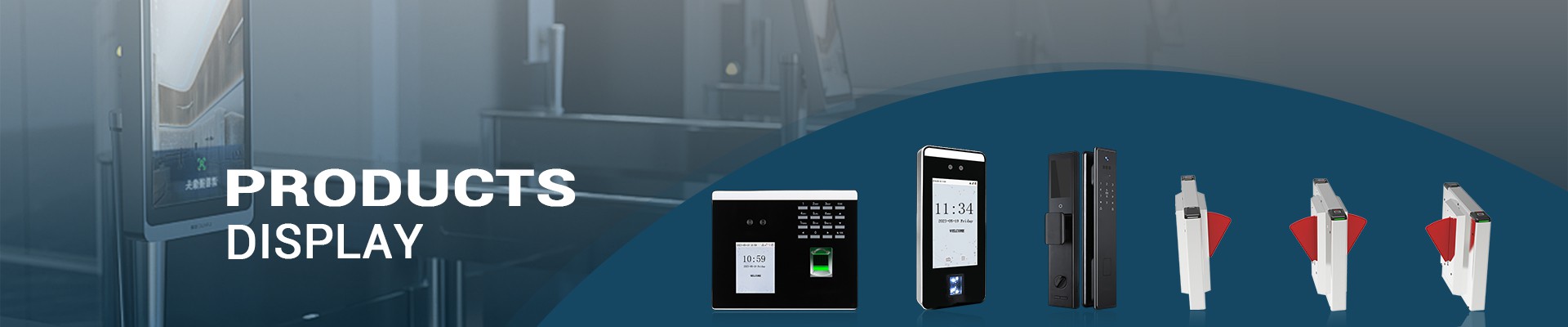
Access control device is an important part of an access control system. Users can be authorized to enter a specific place through the access control device by means of cards, passwords, biometrics, etc. At the same time, the device automatically records the times of entry and exit as well as personnel information. If an abnormal situation occurs (such as illegal entry or abnormal behavior), the system will immediately issue an alarm and notify the relevant personnel. The main functions of the access control device include time and attendance tracking, authority management, access control, record inquiry, and alarm prompts. Administrators can set and manage the rights for each entrance and exit through the management software.
Advantages of Access Control Device
Security
Users must obtain prior authorization to access specific areas, ensuring that only authorized individuals can enter. The system supports multiple identification methods, such as fingerprints, facial recognition, passwords, and cards, combining both high security and user convenience.
Compatibility
Modern access control device typically features open architecture and standardized interface designs, allowing for easy integration with other security systems (such as video surveillance and intrusion alarms). This integration forms a comprehensive security management system, enhancing overall security effectiveness.
Mobility
With the increasing popularity of mobile devices and advancements in Internet of Things (IoT) technology, access control systems have become more mobile-friendly. Users can remotely unlock doors, check access records, and perform other operations through smartphones, tablets, and other portable devices, significantly improving convenience and response times.
Data Analytics and Statistics
Most modern access control systems with time and attendance functionalities can record extensive entry and exit data. This data helps solve issues related to employee working hours and attendance tracking. Through detailed statistical analysis, organizations can gain insights into employees' work habits and activity patterns, providing valuable data to optimize management strategies.
-
![Biometric Fingerprint Access Control]() Biometric Fingerprint Access ControlBiometric fingerprint access control adopts cutting-edge biometric technology, accurate and fast unlocking, and supports fingerprints and other authentication methods. The product has a large capacity of fingerprint database and number ofread more
Biometric Fingerprint Access ControlBiometric fingerprint access control adopts cutting-edge biometric technology, accurate and fast unlocking, and supports fingerprints and other authentication methods. The product has a large capacity of fingerprint database and number ofread more -
![Fingerprint Time Attendance Terminal]() Fingerprint Time Attendance TerminalFingerprint time attendance terminal is a professional access control integrated machine, with a 2.4-inch high-definition color screen and European and American design style, and complies with national safety and security standards.read more
Fingerprint Time Attendance TerminalFingerprint time attendance terminal is a professional access control integrated machine, with a 2.4-inch high-definition color screen and European and American design style, and complies with national safety and security standards.read more -
![Fingerprint Door Access Control]() Fingerprint Door Access ControlFingerprint door access control is a professional access control all-in-one machine launched by our company, which uses a 2.4-inch high-definition color screen, advanced fingerprint identification technology, elegant design style inread more
Fingerprint Door Access ControlFingerprint door access control is a professional access control all-in-one machine launched by our company, which uses a 2.4-inch high-definition color screen, advanced fingerprint identification technology, elegant design style inread more -
![Face Recognition Access Control Terminal]() Face Recognition Access Control TerminalFace recognition access control terminal is a 4-inch facial fingerprint access control terminal launched by our company, integrating visible light facial recognition, fingerprint, IC card and other identification methods, which can beread more
Face Recognition Access Control TerminalFace recognition access control terminal is a 4-inch facial fingerprint access control terminal launched by our company, integrating visible light facial recognition, fingerprint, IC card and other identification methods, which can beread more -
![Facial Recognition Access Control]() Facial Recognition Access ControlFacial recognition access control is a smart face recognition terminal launched by our company, which is different from the previous static face recognition, with the function of fast reading and dynamic recognition.read more
Facial Recognition Access ControlFacial recognition access control is a smart face recognition terminal launched by our company, which is different from the previous static face recognition, with the function of fast reading and dynamic recognition.read more -
![Biometric Face Recognition Time Attendance]() Biometric Face Recognition Time AttendanceBiometric face recognition time attendance is a multi-mode biometrics terminal launched by our company, adopting a more humanized design style with beautiful appearance; equipped with a 2 million HD binocular camera with near-infrared andread more
Biometric Face Recognition Time AttendanceBiometric face recognition time attendance is a multi-mode biometrics terminal launched by our company, adopting a more humanized design style with beautiful appearance; equipped with a 2 million HD binocular camera with near-infrared andread more -
![Biometric Door Access Control]() Biometric Door Access ControlOur biometric door access control adopts Linux operating system, with high-precision facial recognition and fingerprint recognition as the core, using high-performance face recognition algorithms, unlocking fast and safe, and can beread more
Biometric Door Access ControlOur biometric door access control adopts Linux operating system, with high-precision facial recognition and fingerprint recognition as the core, using high-performance face recognition algorithms, unlocking fast and safe, and can beread more -
![Biometric Access Control Device]() Biometric Access Control DeviceBiometric access control device is a multi-functional intelligent face recognition terminal launched according to the market demand, which is different from the previous static face recognition, with the function of fast reading andread more
Biometric Access Control DeviceBiometric access control device is a multi-functional intelligent face recognition terminal launched according to the market demand, which is different from the previous static face recognition, with the function of fast reading andread more -
![Biometric Time Attendance Machine]() Biometric Time Attendance MachineBiometric time attendance machine is one of our newly launched face recognition attendance access control all-in-one machine, with 7-inch touch screen, high dynamic binocular camera, with near infrared and visible light double fill light,read more
Biometric Time Attendance MachineBiometric time attendance machine is one of our newly launched face recognition attendance access control all-in-one machine, with 7-inch touch screen, high dynamic binocular camera, with near infrared and visible light double fill light,read more


Why Choose Us
Our factory
Dalian Ruiyu Technology Co., Ltd., a leading company in intelligent security and biometric recognition, focuses on biometric technology as its core, integrating cutting-edge technologies such as computer vision, Radio Frequency Identification (RFID), and the Internet of Things (IoT) to provide comprehensive products and customized solutions for the security, attendance, door lock, and software industries, setting a new trend in intelligent technology.
Our products
All kinds of products have either fingerprint recognition, or card recognition, or face recognition and other various biometric modes, which will provide security and convenience for your work and life.
Production market
With exceptional product performance and perfect after-sales service system, we have achieved remarkable performance in both domestic and international markets, earning widespread credit. Our intelligent security products, which sell well in Asia, Europe, North America and other 100+ countries and regions around the world, have won wide recognition in the international market.
Our service
Our company, customer-oriented, provides one-stop service. Before the sale, we provide professional consulting and proposal design services to ensure that customer needs are accurately achieved; During the sale, we provide installation guidance and technical support to ensure smooth product deployment; After-sales, we have a 24-hour customer service hotline and rapid response mechanism, at any time to solve the problems encountered by customers, so that customers have no worries.

Another important consideration is the access control devices to be used for identification and verification at controlled entrances. The ideal management model for an access control system authorises carriers (people, cars etc) rather than the identifiers (cards). And can therefore allow a carrier to use several identification technologies efficiently, based on their single set of authorisations.
This efficient model then enables you to use, and easily manage, a variety of identification and verification methods. So you can select the best option for each access point based on factors such as risk or user requirements. It’s possible, for example, to use card readers, PIN readers, biometric devices and number plate readers all in one access control system.
Importantly, this ideal authorisation management model means that changing a device to increase security or add a feature (e.g. the use of PINs) demands little in terms of system management.
Key Components of Access Control Device
Authentication
Authentication is the foundational security measure, acting as the initial barrier to unauthorized access within a system. This critical process ensures that only individuals with proper authorization gain entry.
Passwords and Passphrases: These alphanumeric codes or phrases, known only to authorized users, establish a fundamental access control layer. Often complemented by other authentication factors, they serve as a basic yet crucial layer of defense.
Multi-factor Authentication (MFA): Elevating security, MFA requires multiple forms of identification. Combining factors such as passwords, biometrics, or security tokens adds more robustness to the authentication process.
Leveraging unique physical or behavioral traits like fingerprints or facial features, biometric authentication provides high security and user convenience, enhancing the overall access control mechanism.
Authorization
Authorization delineates the extent of access granted to authenticated users, ensuring that permissions align with organizational roles and responsibilities.
Role-Based Access Control (RBAC): RBAC simplifies administrative tasks and reduces the risk of unauthorized access by assigning access rights based on predefined roles. This method promotes the establishment of an efficient and secure access control structure.
Consider an e-commerce platform where roles like "Customer," "Sales Representative," and "Administrator" are defined. Each role has distinct access rights, with an admin having control over system configurations, while a sales representative can only manage product listings.
Least Privilege Principle: Embracing the least privilege principle involves restricting user access to the bare minimum required for task performance. This practice is a proactive measure against potential security breaches by curtailing unnecessary privileges.
Encryption
Encryption is crucial for enhancing security. It transforms data into an unreadable format, secures communication channels, and ensures the confidentiality of stored information across multiple devices.
Data Encryption: Encryption is pivotal in transforming sensitive data into a secure format, making it accessible only through an appropriate decryption key.
By doing so, data encryption safeguards information stored on devices or transmitted over networks. This layer of protection is critical in preventing unauthorized parties from deciphering and exploiting confidential data.
Communication Encryption: Communication encryption becomes paramount during data transmission over networks. Protocols such as SSL/TLS exemplify this practice by encrypting the data in transit, thereby ensuring the confidentiality of sensitive information.
This precautionary measure is particularly vital in thwarting potential eavesdropping and data interception, providing a secure channel for the exchange of information.
Device Encryption: Extending its protective reach, encryption is also applied to entire storage devices through device encryption. This ensures the confidentiality of data, even in scenarios where the physical device is lost or stolen.
Monitoring & Logging
The meticulous implementation of monitoring and logging practices stands as a linchpin for fortifying the defenses of any system. This multifaceted approach encompasses critical facets that provide nuanced insights into the intricate web of system activities and events. Let's delve into the key components:
Audit Trails: As a meticulous record keeper, audit trails capture intricate details of user activities, system modifications, and security events. Beyond mere documentation, these trails play a pivotal role in upholding compliance standards, facilitating forensic scrutiny, and acting as sentinels for identifying suspicious behavior.
By maintaining a granular record of operations, organizations showcase accountability and gain the capability to discern potential vulnerabilities and mount effective responses to security incidents.
What to Look for in a Access Control Device
When considering your access control device plans, there are a few key elements to think about that will ensure you implement the right access control device procedures for your business
Security level
Choosing the type of credentials to use will determine an organization’s level of security. Key card access control systems and key fobs can be lost or shared between users, making them a less secure option, while it’s more difficult to breach biometric and mobile technology.
Ease of use
It’s critical that your pacs is simple to use and manage. A user-friendly pacs allows operators to add and revoke access rights within seconds, as well as triggering emergency responses such as building lockdowns. It’s also important that the physical access security system enables operators to easily pull reports, so property owners can understand how users are accessing their building.
Flexibility
If you have plans to expand your business, you need a pacs that can be scaled up as your company grows. A scalable solution enables property owners to easily add entry points and locations to an access control dashboard with just a few clicks.
Ways to Maintain and Maximize your Access Control Devices
Engage professional installation and maintenance
We often have installation “maguire” who act like they can install any device without the technical know-how but then eventually brick your device. This has become a recurring issue over time. Consider engaging professional maintenance services from the manufacturer or a trusted security provider. These experts can perform routine inspections, preventative maintenance, and diagnostics on your access control devices. They have the expertise to identify and address potential issues before they escalate, maximizing the lifespan and performance of your devices.
Keep the devices clean
Regular cleaning is vital for the proper functioning of access control devices. Dust, dirt, and debris can accumulate on the sensors or card readers, affecting their accuracy and performance. Use a soft, lint-free cloth or an approved cleaning solution to wipe down the surfaces and remove any build-up. Avoid using abrasive materials or harsh chemicals that May damage the devices.
Test and calibrate regularly
To maintain the accuracy of biometric access control devices, it is crucial to conduct regular tests and calibrations. Calibration ensures that the sensors accurately capture fingerprints or other biometric data, providing reliable access control.
Update firmware and software
Stay up-to-date with the latest firmware and software releases. These updates often include bug fixes, security patches, and performance enhancements. Regularly check for updates and follow the manufacturer's instructions to install them correctly. By keeping your devices up to date, you ensure that they are operating at their optimal level of security and functionality.
Secure power supply
Access control devices rely on a consistent power supply to function properly. Ensure that the power source is stable and protected against surges or fluctuations. Consider installing surge protectors or uninterruptible power supply (U.S) systems to safeguard your devices from power-related issues. Regularly check power cables and connections for any signs of damage or wear, and replace them as needed.
Monitor and analyze logs
Most access control devices maintain logs that record various activities and events. Regularly monitor and analyze these logs to identify any irregularities or potential issues. Unusual access attempts, errors, or system malfunctions should be promptly investigated and resolved. Monitoring logs can help you detect security breaches, system errors, or unauthorized access attempts promptly.
Implement user training
Train your personnel responsible for operating and maintaining the access control devices. Provide them with proper instructions on how to use the devices correctly, clean them, and report any issues. Educate users on best practices for access control, including the importance of keeping their access credentials secure and reporting any lost or stolen cards or tokens immediately.
Our factory
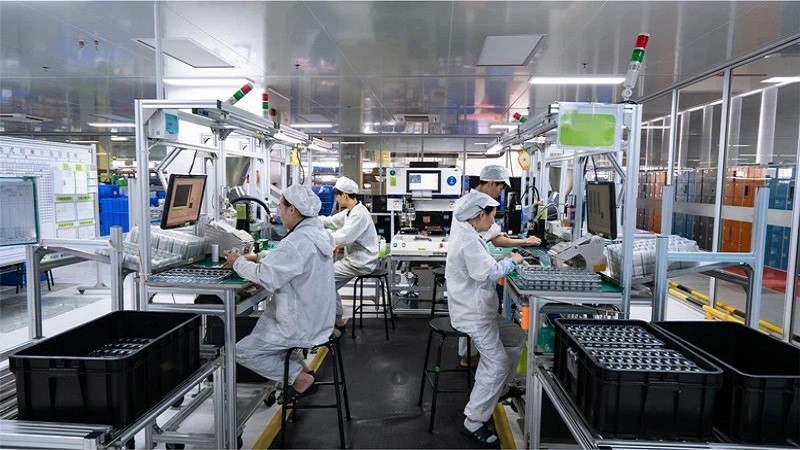
Dalian Ruiyu Technology Co., Ltd., a leading company in intelligent security and biometric recognition, focuses on biometric technology as its core, integrating cutting-edge technologies such as computer vision, Radio Frequency Identification (RFID), and the Internet of Things (IoT) to provide comprehensive products and customized solutions for the security, attendance, door lock, and software industries, setting a new trend in intelligent technology. Our factory is an industry-leading OEM/ODM manufacturing center, known for its excellent production capacity and customized services, and has been supplying products to the world's top 50 smart product brands for years, demonstrating exceptional quality. Depending on the most advanced production lines and integrating cutting-edge technology with a rigorous 6S management system, we ensure meticulous attention to detail from raw materials to finished products, creating an efficient and precise production process.


FAQ
Q: What is an access control device?
A: An access control device is a security tool used to manage and restrict access to physical locations or digital resources, ensuring that only authorized individuals can enter.
Q: How do keycard readers work?
A: Keycard readers use magnetic stripes or RFID technology to read data from a card, allowing access when the card is presented to the reader.
Q: What are biometric access control devices?
A: Biometric devices use unique physical characteristics, such as fingerprints, facial recognition, or iris scans, to verify a person's identity before granting access.
Q: What is a keypad access control device?
A: A keypad device requires users to enter a numeric code to gain access, providing a simple and effective method for controlling entry.
Q: How do turnstiles function as access control devices?
A: Turnstiles are physical barriers that allow entry only when a valid access method is used, such as a keycard or biometric scan, ensuring controlled access.
Q: What is a mobile access control system?
A: Mobile access systems allow users to unlock doors using their smartphones, often through Bluetooth or NFC technology, providing convenience and flexibility.
Q: What are the benefits of using biometric access control devices?
A: Biometric devices offer high security, as they are difficult to forge or share, and they can streamline access without the need for physical keys or cards.
Q: How do access control devices enhance security?
A: They restrict access to authorized individuals, monitor entry and exit, and can be integrated with surveillance systems for comprehensive security.
Q: What is the role of access control software?
A: Access control software manages user permissions, tracks access events, and integrates with hardware devices to provide a cohesive security solution.
Q: How can organizations choose the right access control device?
A: Organizations should consider factors such as security needs, user volume, ease of use, integration capabilities, and budget when selecting devices.
Q: What is the principle of least privilege in access control?
A: The principle of least privilege ensures that users are granted the minimum level of access necessary to perform their job functions, reducing security risks.
Q: How do access control devices integrate with other security systems?
A: Many access control devices can be integrated with alarm systems, CCTV cameras, and building management systems for enhanced security and monitoring.
Q: How can access control devices improve visitor management?
A: They can track visitor access, issue temporary credentials, and monitor movements within a facility, enhancing security and accountability.
Q: What is the importance of regular maintenance for access control devices?
A: Regular maintenance ensures that devices function correctly, reduces the risk of failures, and extends the lifespan of the equipment.
Q: How do access control devices contribute to emergency response?
A: They can provide real-time data on who is in the building during emergencies, aiding evacuation efforts and ensuring accountability.
Q: What are the privacy concerns associated with biometric devices?
A: Privacy concerns include data security, potential misuse of biometric data, and compliance with regulations regarding personal information.
Q: How can organizations educate employees about access control devices?
A: Organizations can provide training sessions, distribute informational materials, and conduct regular reminders to ensure employees understand access protocols.
Q: What role does technology play in modern access control devices?
A: Technology enhances access control through automation, remote monitoring, and data analytics for improved security management.
Q: What future trends are expected in access control devices?
A: Future trends may include increased use of AI for threat detection, advanced biometric systems, and greater integration with smart building technologies.
Q: How do access control devices help in compliance with regulations?
A: By implementing strict access control measures, organizations can ensure that only authorized personnel access sensitive data, helping to meet regulatory requirements.
As one of the leading access control device manufacturers and suppliers in China, we warmly welcome you to wholesale high quality access control device for sale here from our factory. Contact us for more details.
biometric access device, Biometric Face Recognition Time Attendance, access control device-
![Biometric Fingerprint Access Control]() Biometric Fingerprint Access ControlBiometric fingerprint access control adopts cutting-edge biometric technology, accurate and fast unlocking, andread more
Biometric Fingerprint Access ControlBiometric fingerprint access control adopts cutting-edge biometric technology, accurate and fast unlocking, andread more -
![Fingerprint Time Attendance Terminal]() Fingerprint Time Attendance TerminalFingerprint time attendance terminal is a professional access control integrated machine, with a 2.4-inchread more
Fingerprint Time Attendance TerminalFingerprint time attendance terminal is a professional access control integrated machine, with a 2.4-inchread more -
![Fingerprint Door Access Control]() Fingerprint Door Access ControlFingerprint door access control is a professional access control all-in-one machine launched by our company, which usesread more
Fingerprint Door Access ControlFingerprint door access control is a professional access control all-in-one machine launched by our company, which usesread more -
![Smart Biometric Fingerprint Door Lock]() Smart Biometric Fingerprint Door LockSmart biometric fingerprint door lock adopts a full-screen design, fingerprint entry is set at the handle so it is moreread more
Smart Biometric Fingerprint Door LockSmart biometric fingerprint door lock adopts a full-screen design, fingerprint entry is set at the handle so it is moreread more -
![Flap Barrier]() Flap BarrierThe flap barrier is a type of turnstile gate with a stylish appearance, fast traffic speed, and effective pedestrianread more
Flap BarrierThe flap barrier is a type of turnstile gate with a stylish appearance, fast traffic speed, and effective pedestrianread more -
![Tripod Turnstile]() Tripod TurnstileA tripod turnstile is a waist high access control turnstile with three revolving arms. Tripod turnstiles restrictread more
Tripod TurnstileA tripod turnstile is a waist high access control turnstile with three revolving arms. Tripod turnstiles restrictread more


