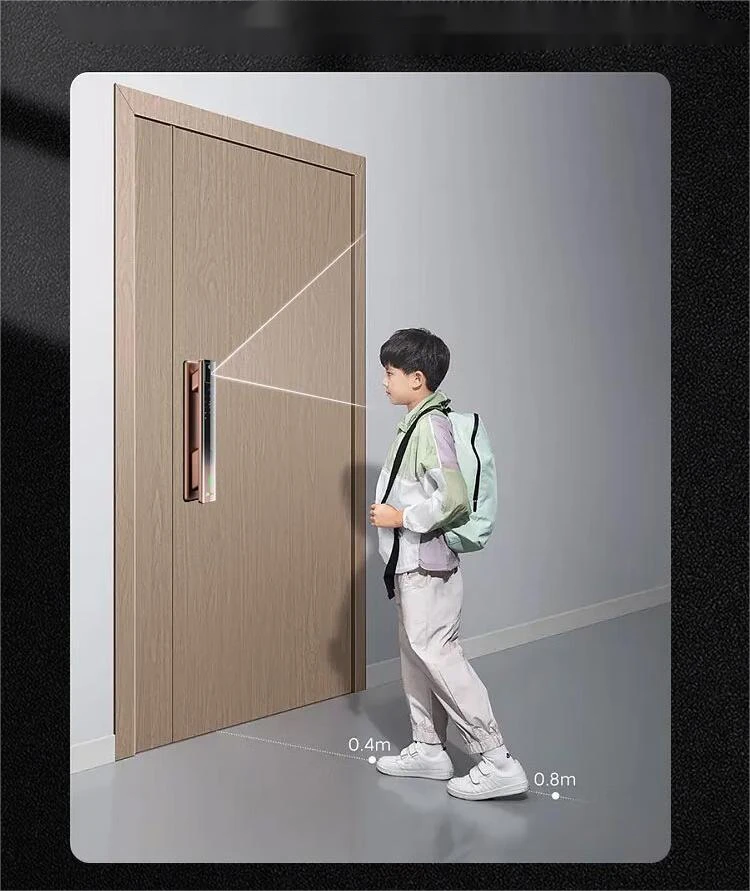
Smart door locks are safer and more convenient than mechanical door locks and have been widely accepted and trusted. For the choice of fingerprint recognition and face recognition for smart door locks, we compare in detail below.
1.Fingerprint Recognition
Fingerprint recognition smart locks unlock by reading the user's fingerprint information and comparing it with the information stored in the lock in advance. These locks offer high security and are not easy to be copied, making them a good choice for families without prior fingerprint identification experience. However, if someone at home has an injured or dislocated finger, fingerprint recognition cannot be used, highlighting the limitations of fingerprint recognition locks.
2.Face Recognition
Face recognition smart locks capture the user's facial features through a camera and compare them with the information stored in the lock in advance to realize unlocking. Face recognition locks offer higher convenience and applicability, even for users without fingerprint information. They are more user-friendly for those who cannot use fingerprints, such as the elderly and children at home. However, face recognition locks require the camera to clearly capture facial features, and differentiating facial features for various people can be challenging for smart lock manufacturers. The technology of the current mainstream smart door lock providers is very mature; However, the biggest concern remains whether people are willing to store facial information and whether the use of cameras is being manipulated.
3.Comprehensive Comparison
For ordinary families, both fingerprint recognition and face recognition have their own advantages and disadvantages. In terms of security, fingerprint recognition is relatively high but has its limitations; while face recognition offers higher convenience and applicability, and is more user-friendly for different user groups. In terms of price, there isn't much difference between the two, but face recognition locks may see cost reductions as the technology advances and becomes more widespread. In terms of maintenance, both require regular upkeep to ensure stable and safe performance.
Additionally, users need to consider factors such as the installation environment and personal habits. For example, if there are frequent temporary visitors at home, fingerprint recognition locks might be preferable; conversely, if there are family members who cannot use fingerprint or facial recognition, face recognition locks could be a more suitable option.
4.After-sales and Brand Selection
After-sales service and brand selection are also important considerations when choosing a smart lock. Excellent brands and comprehensive after-sales service can ensure the quality and stability of smart locks and provide users with a better experience. Moreover, different brands of smart locks may offer varying functions and performances, allowing users to select a smart lock that best suits their family's needs.
In summary, fingerprint recognition and face recognition each have their own strengths and weaknesses, and users should choose based on their specific situations. When selecting a smart lock, consider technical factors, the installation environment, personal habits, and aspects like after-sales service and brand selection. Only by choosing a smart lock that fits your needs can you better protect your family's security.